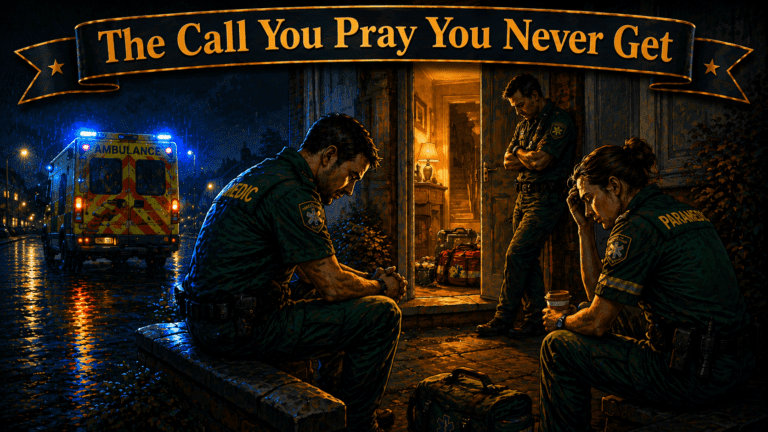
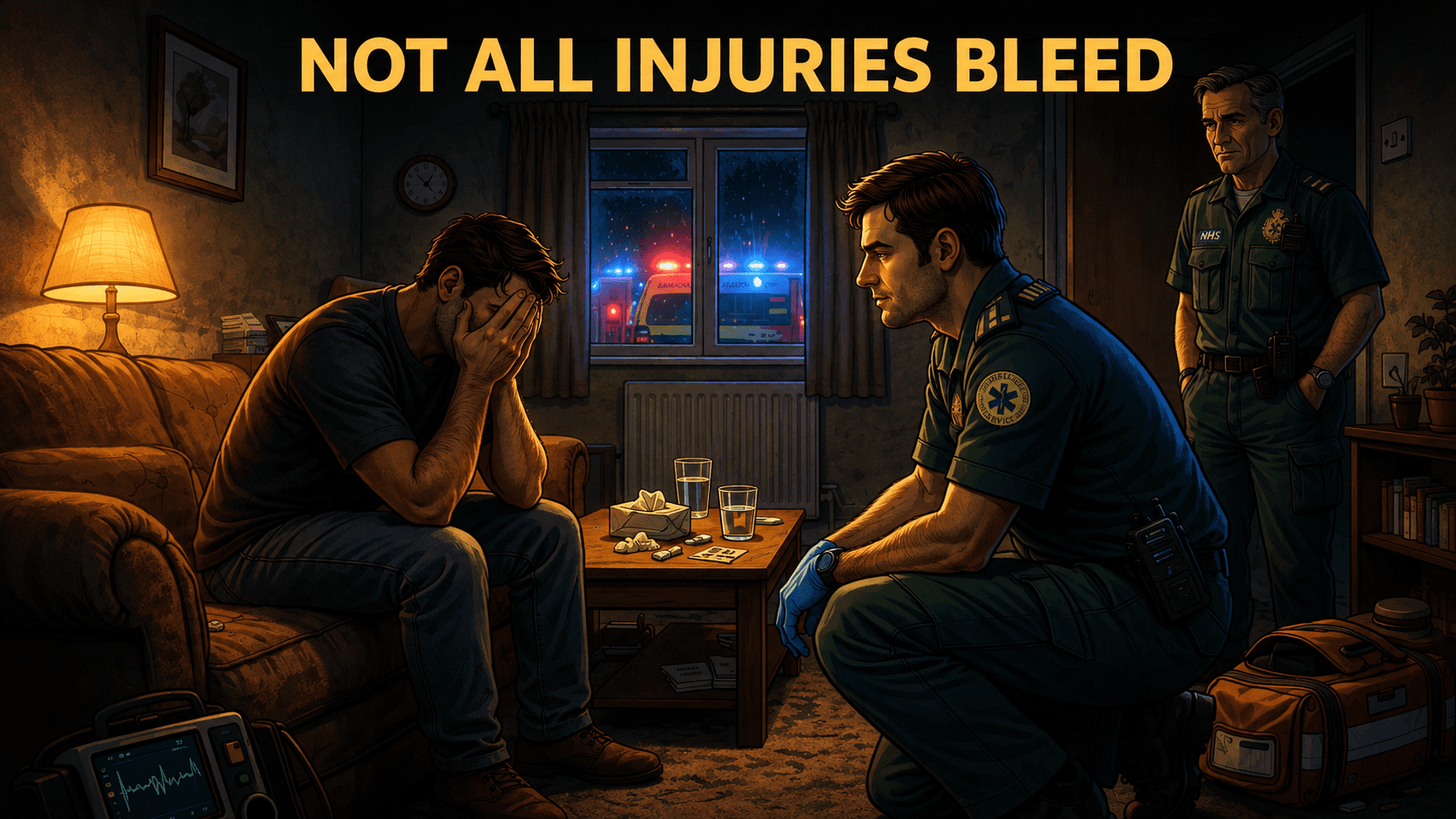
The room is often quiet when we arrive. Not peaceful quiet, but the kind that feels heavy. Someone sits in front of us — sometimes on a sofa, sometimes on the edge of a bed, sometimes simply on the floor — trying to hold themselves together while their world feels like it is slowly falling apart. We sit opposite them. Uniform on. Radio on the shoulder. The person expected to bring calm to the chaos.
For much of my career in the ambulance service, I have been that person. Like many Paramedics and EMTs, I quickly learned that not every emergency we attend involves trauma, cardiac arrest or the dramatic scenes people associate with blue lights. A significant part of our work, then and ever-increasing today, involves something far less visible but often far more complicated: mental health crises.
Depression. Anxiety. Panic attacks—suicidal thoughts.
People who feel they have reached the end of what they can carry. Sometimes they have taken tablets. Sometimes they are standing somewhere they should not be. Sometimes they have called for help because they know they are close to doing something they cannot undo. Sometimes they sit in their own home and say words that many people never imagine saying out loud.
“I can’t cope anymore.”
Those calls require a different type of approach. No monitor tells you what is happening inside someone’s mind. There is no single drug that fixes despair. Instead, the work becomes quieter and more deliberate. You sit down, slow your voice and begin asking questions that try to understand rather than judge.
Over the years, I have sat with many people who had reached a point where hope seemed to have quietly slipped away. Some were dealing with sudden loss. Others had been struggling silently for years. Many apologised to us for calling.
That always stood out to me. Here was someone at their lowest point, yet they still felt they were wasting our time. You reassure them that they are not. You listen more than you speak. Eventually, a plan begins to form. Sometimes that means the hospital. Sometimes it means involving crisis teams or family members. Whatever the outcome, the aim is always the same — to get them through the immediate moment safely.
Then the job ends.
You clear the scene, complete the paperwork and move on to the next call. From the outside, it appears straightforward. The ambulance leaves. The situation is behind you. But some calls leave a small mark behind. A conversation that lingers. A face that stays in your mind longer than expected.
Most of the time, those thoughts fade quickly. The rhythm of the job moves you forward. Another call comes in. Another patient needs help. Over time, you learn to compartmentalise because the job demands it, and that system worked well for me for years. Like many ambulance staff, I developed the ability to handle difficult situations and keep functioning. Trauma, grief and distress became part of the professional landscape of the job. You processed it, placed it somewhere in the back of your mind and carried on. Occasionally, though, something changes.
Not suddenly. More like a slow burn. I cannot point to a single incident that caused it. Instead, it was the gradual accumulation of difficult calls. The type that sits quietly in the background, even when you believe you have moved on. At first, the signs were subtle. A growing sense of anxiety before shifts. Irritability appears without any obvious reason. Mood swings that did not quite make sense. Sleep was becoming less reliable. Thoughts continued long after the shift had finished.
It was easy to dismiss. Ambulance work is busy and unpredictable. Stress comes with the job. For a long time, I assumed what I was experiencing was simply another version of that pressure. It wasn’t. Over time, the anxiety became harder to ignore. The mind struggled to settle even during time off. Small frustrations began to feel heavier than they should have. Mental exhaustion appeared more frequently and lasted longer. Then came the moment that forced me to recognise something was seriously wrong.
Suicidal thoughts.
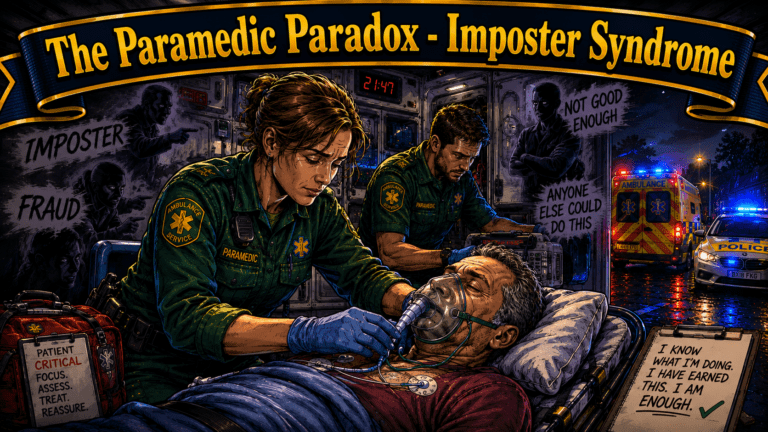
For someone who had spent years attending patients experiencing those exact thoughts, the experience was deeply unsettling. These thoughts did not arrive dramatically. They appeared quietly, often when the mind was already tired. But they were there. I recognised them immediately. I could be sitting laughing and joking with colleagues in the kitchen over a cup of tea, then head to the crew room, lie on the sofa, and find myself thinking: “why lie here… if you walk out of the station you could walk in front of the next bus that comes, cause nobody would miss you and you could stop feeling the way you do now.” The realisation that the same type of thoughts I had spent years helping others through were now appearing in my own mind created a mixture of fear, confusion and self-doubt. Questions began to surface that I had never previously considered.
How had it reached this point? Had I missed the warning signs in myself? Was I no longer able to cope with the job I had done for so long? After all, I worked with colleagues who had worked in the ambulance service through the worst of the Troubles, and it didn’t seem to affect them. My crewmate at the time also experienced the same calls I did and seemed fine with it. Whilst the highs were high, the lows were low. There didn’t seem to be any middle ground.
For many emergency service workers, those questions are accompanied by another powerful feeling: embarrassment. The expectation of resilience runs deep in ambulance culture. Being the person who responds to a crisis can make it incredibly difficult to admit when you are experiencing one yourself. For a long time, I tried to convince myself that the situation would resolve if I carried on working and ignored the thoughts. But mental health rarely improves when it is pushed aside. Eventually, I reached a point where continuing as normal was no longer possible.
The decision to speak up and seek help was not easy. Asking for support meant acknowledging that I was struggling in a way I had never anticipated during my career. It also meant stepping away from work for a significant period. Taking time off because of mental health carries its own emotional weight. Physical injuries are visible and easily understood. Psychological injuries are often hidden, which can lead to concerns about how others may perceive them. Despite those worries, the time away was necessary.
During that period, I began counselling—counselling forces you to slow down and examine things you may have ignored for years. For people used to responding quickly to problems, that process can initially feel uncomfortable. But it also provides space to understand how repeated exposure to distress and crisis can gradually affect the mind. Through counselling, I began to understand the pattern that had developed. It was not one single event that had caused the problem. It was the accumulation of many experiences over time, combined with a habit of pushing emotions aside so the job could continue.
None of those moments had seemed overwhelming individually. Together, they had quietly built a weight that eventually became impossible to ignore. One of the most important outcomes of counselling was the removal of the shame I had attached to the experience. Mental health struggles are often viewed as personal weakness, particularly in professions where resilience is highly valued. In reality, they are often the result of prolonged exposure to stress and trauma.
Ambulance staff witness people at some of the most vulnerable moments of their lives. We encounter fear, grief and despair regularly. Over time, those experiences inevitably leave an impact. Recognising that does not diminish the professionalism of the job.
It simply acknowledges the humanity of the people doing it. Recovery was gradual rather than immediate. Mental health rarely returns to normal overnight. It improves through small steps, reflection and learning how to recognise early warning signs before pressure begins to build again.
What the experience ultimately changed most was perspective. For years, I had approached mental health calls with empathy and professionalism. I listened to patients describe anxiety, hopelessness and overwhelming thoughts. I did my best to guide them through moments of crisis. What I had not fully appreciated until my own experience was how complex those internal struggles can be.
The embarrassment. The fear of being judged. The quiet self-doubt that accompanies the feeling of losing control.
These emotions are often invisible to the outside observer, yet they shape how people experience crisis. By the time ambulance crews are called, we are often seeing only the final moment of a much longer struggle — one that has been building quietly beneath the surface, carried alone until it can no longer be. Living through my own period of crisis gave me a deeper understanding of that reality.
It also highlighted something important within emergency services. We are trained to recognise distress in patients and encourage them to seek support. Yet historically, it has sometimes been harder for staff themselves to ask for that same help.
That culture is gradually changing. Conversations about mental well-being are becoming more common. Support systems such as counselling and peer support are increasingly recognised as essential rather than optional. Perhaps the most powerful change happens when individuals speak honestly about their experiences. When someone who has spent years responding to emergencies admits that they themselves needed help, it challenges the idea that resilience means never struggling.
Resilience is not the absence of difficulty. It is the willingness to recognise when support is needed. Looking back now, that period was one of the most difficult chapters of my career. It forced me to confront vulnerabilities I had previously ignored and to reconsider how I viewed both mental health and professional identity.
But it also provided something valuable. Perspective.
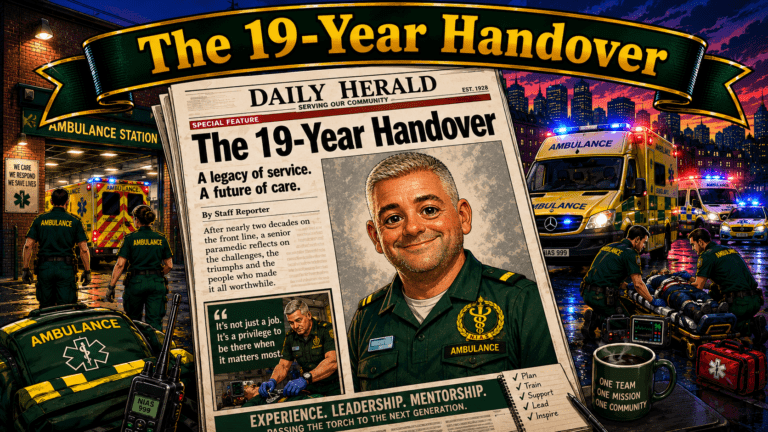
I returned to work with a deeper awareness of how easily mental health pressures can build unnoticed. It reinforced the importance of looking after not only the patients we treat but also the people who wear the same uniform. Behind every ambulance uniform is a human being who is daily exposed to situations most people rarely encounter. Those experiences do not always remain neatly contained within a shift.
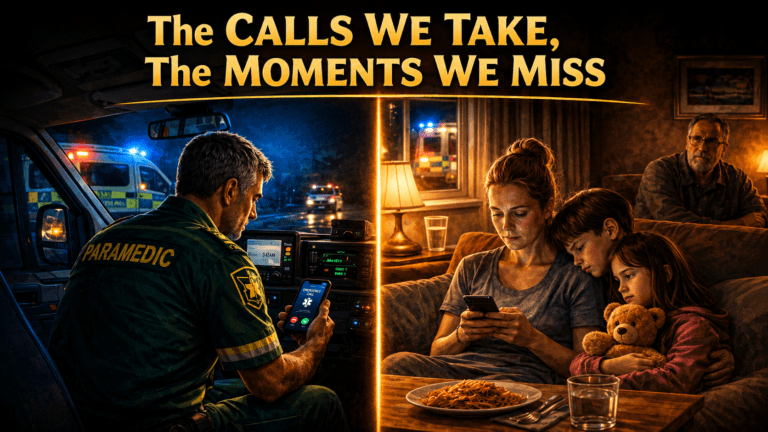
Sometimes they follow us home. The public often sees ambulance staff only during brief moments of crisis. We arrive quickly, assess the situation and do everything we can to help. From the outside, it can appear as though we move seamlessly from one emergency to another without pause.
The reality is far more human. We carry stories. We carry memories. Occasionally, if we are not careful, we carry the emotional weight of those experiences longer than we realise. My own experience with anxiety, mood swings and suicidal thoughts was not something I ever expected during my career. Yet in many ways, it deepened my understanding of the people we are called to help.
When that moment of crisis arrives — for a patient or for the person treating them — the most important step is the same: reaching out and asking for help, saying the words out loud.
The difference now is that I understand that moment not only as an EMT or as a Paramedic sitting across the room, but as someone who has stood on both sides of that conversation.
If this story resonated with you, please know you are not alone. Mental health struggles can build quietly over time, and there is no shame in finding them difficult to carry. If you are going through something similar — whether you are an emergency worker or not — please reach out. Talk to a friend, your colleagues, a family member, or your GP. You don’t have to have all the words ready; simply starting the conversation is enough. Help is available, and you deserve to receive it just as much as anyone else.
Dave 💙